.svg)
Food distribution warehouses face constant pressure to most faster while maintaining accuracy across lots, dates, and inventory locations. Many teams still rely on manual work, disconnected systems, or tribal knowledge to keep operations running, which makes consistency and scale difficult.
In this on-demand webinar, we cover practice warehouse best practices built specifically for food distributors.
Learn how transactional detail across receiving, inventory management, selection, and delivery creates accuracy you can manage and measure.
See the operational disciplines leading food distributors use to reduce rework, prevent errors, and protect profitability.
Understand where lots, dates, catchweights, and manual workarounds introduce risk and how to maintain control.
Learn how structured truck building, scan-based execution, and process guidance improve PPH without increasing returns.
Discover how proactive alerts and operational reporting help leaders spot bottlenecks, measure execution, and drive continuous improvement.
Welcome to BFC Software’s Warehouse Best Practices Webinar. I'm Stuart Ransom, BFC’s Chief Revenue Officer, and I’m joined today by Ben Sampson, our Head of Solution Engineering. If you have any questions during the webinar, please drop them into the chat. We’ll do our best to address them either during the session or at the end during Q&A. Thanks again for joining us.
Over the next hour, we’ll be sharing food distribution–specific operational best practices. These best practices have been developed and implemented by BFC over the past 30 years through our warehouse management system (WMS). Our goals for today are threefold: 1. Highlight the everyday challenges food distributors face 2. Explain why system-driven best practices matter 3. Show how these best practices apply to both inbound and outbound warehouse operations Ultimately, our goal is to demonstrate how you can improve both operational productivity and business profitability. We’ll also include a few survey questions throughout the session—please keep an eye out and share your input. Let’s start with the reality of the industry. Every day, money is walking out the door—through poor inventory control, labor inefficiencies, mispicks, and product damage. These operational challenges directly conflict with service level targets, which are critical for customer retention and growth. On top of that, regulatory pressures like FSMA 204 continue to add cost and complexity. Because of all this, operational best practices are not optional—they’re essential. These challenges create variability, inconsistency, and complexity in execution. System-driven best practices help standardize operations, improve accuracy and speed, and simplify complex processes through guided workflows and alerts. Perhaps most importantly, they give leaders visibility—allowing them to quickly identify and correct issues in near real time.
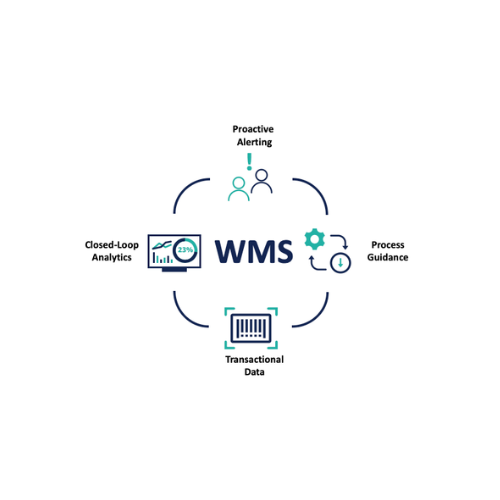
For more than 30 years, BFC has focused exclusively on the food industry. Our software is built with embedded, configurable best practices across four key areas: - Transactional data capture - Process guidance - Proactive alerting - Closed-loop analytics This food-specific approach helps improve labor efficiency, reduce errors, and increase inventory accuracy—ultimately driving growth and profitability. With that, I’ll hand it over to Ben to walk through how this works in real-world operations.
Thanks, Stuart. We’ll walk through the four pillars of best practices—transactional data, process guidance, proactive alerting, and analytics—starting with receiving and put-away. Receiving is where everything begins. To maintain inventory accuracy throughout the lifecycle, it must start at the dock. That means everything should be scan-based—whether at the pallet, case, or item level. With a single scan, you can capture key data like weight, lot number, expiration date, and item details. This ensures accurate, granular inventory capture—not just receiving entire trucks or pallets blindly. Next is process guidance. Food distribution is complex. A case is not just a case—it may have unique handling rules, weights, or temperature requirements. The system guides users through exactly what needs to be captured and how items should be handled, stacked, and stored—ensuring consistency across all receivers. Proactive alerting ensures that when something falls outside expected parameters—like incorrect weight or missing data—the system flags it immediately. Finally, closed-loop analytics allow you to step back and evaluate performance over time—tracking productivity, receiving errors, and process compliance.
Inventory is constantly changing, especially in food distribution.A strong WMS captures every movement as a transaction—tracking not just quantities, but who moved inventory, when, and where. It also preserves key data like lot and expiration throughout the lifecycle. Process guidance ensures structured workflows for cycle counting and replenishment. The system directs users where to go, what to count, and how to capture data—reducing reliance on memory or manual judgment. Proactive alerting highlights anomalies like frequent adjustments or inconsistencies tied to specific vendors, items, or users. Closed-loop analytics then help identify trends—whether inventory issues stem from receiving, storage, or replenishment processes.
Selection and loading introduce new complexities—like temperature zones, product fragility, and route sequencing. Everything remains scan-based, ensuring each item is validated before it leaves the warehouse.Process guidance directs selectors through optimized pick paths, ensuring proper pallet build (for example, placing heavier items before fragile ones). Proactive alerts prevent errors like selecting the wrong item or missing required data.Analytics provide visibility into productivity, scan compliance, and accuracy trends—helping managers balance speed and quality.
The final step is delivery—and it’s just as critical. Without proof of delivery, the process breaks down. With a mobile solution, drivers scan every item off the truck, capturing delivery confirmation, returns, and exceptions. Process guidance ensures proper handling of returns—whether items go back into inventory, are marked damaged, or require further review. Proactive alerts prevent incorrect deliveries and provide real-time visibility into route progress. Analytics track delivery performance, return reasons, and driver efficiency—closing the loop on the entire operation.
Across the entire warehouse lifecycle, best practices come down to four core principles: - Transactional data: Capture every movement - Process guidance: Standardize execution - Proactive alerting: Prevent errors in real time - Closed-loop analytics: Continuously improve Together, these create a system that is consistent, efficient, and highly visible—making it easier to scale operations while maintaining accuracy.