.svg)
THE CHALLENGE
Manual operations were working hard. The process was not scaling.
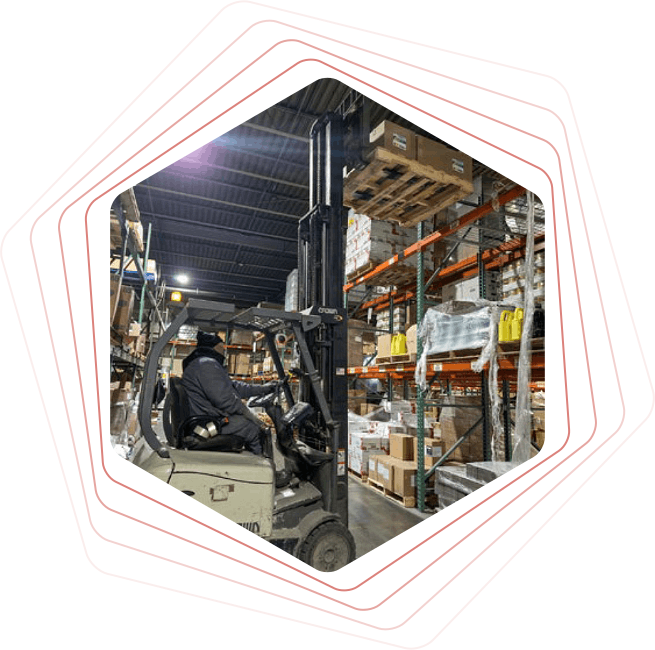
Latina Boulevard Foods was moving 20,000–30,000 cases per night with paper load sheets, tribal knowledge, and manual truck-building decisions. As volume grew, errors, rework, credits, and inventory blind spots became too costly to ignore.
WHY NOW
The warehouse had reached a tipping point.
Operating nearly 400,000 square feet and moving 25,000+ cases per night on pen and paper was no longer sustainable. Latina knew a WMS was necessary, but leadership also understood the organization had to be operationally ready before technology alone could succeed.
WHY DAKOTA WMS
Built for food distribution operations.
Latina evaluated multiple warehouse systems before selecting Dakota WMS. The decision came down to foodservice expertise, practical workflows, inbound and outbound functionality, and confidence in the implementation partnership.
- Deep foodservice distribution expertise
- Strong inbound & outbound warehouse functionality
- Lot traceability and compliance readiness
- Practical operator-focused workflows
- Seamless integration with existing ERP environment
- Visibility into warehouse performance
- Reduction in costly mispicks and returns
- Improved accountability across shifts
- Better inventory confidence and truck accuracy
- A scalable warehouse foundation for growth
- Load sheets guided nightly selection.
- Night managers built pallets manually based on experience.
- Errors were hard to diagnose until trucks left the building.
- Truck flow depended heavily on tribal knowledge.
- Pick validation reduced mispicks and improved accountability.
- GTIN and UPC capture strengthened receiving accuracy.
- Leadership gained visibility into performance and exceptions.
- Latina began tracking KPIs that were not possible before.