.svg)


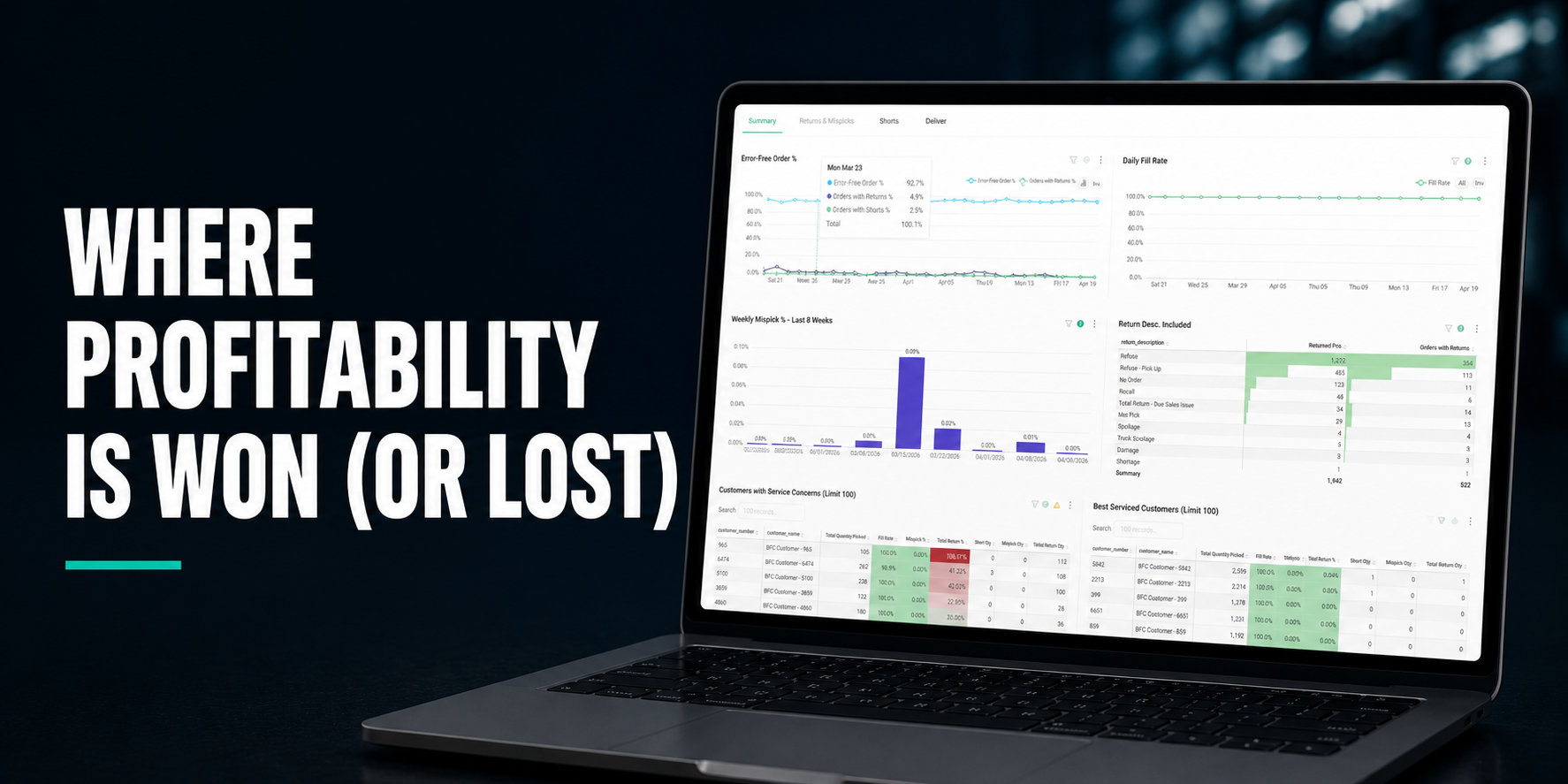
In food distribution, buying decisions are where a huge chunk of your profit is won or lost. Yet for many distributors, the buying function still runs on gut feel, spreadsheets, and “the way we’ve always done it.” That might be fine when things are predictable. But today? Demand swings, vendor lead times slip, and perishable waste eats margins alive.
If you’re feeling the pain of missed forecasts, overstocked inventory, or product expiring on the dock, you’re not alone. Here’s how leading distributors are measuring and improving their buying teams — and the signals to watch for if you’re ready for a more systematic approach.
We recommend starting small, with three buckets:
When you put these numbers in front of your team, you get a very different conversation than “When did we or why didn’t we place the PO?”
The vital part of buying isn’t the math; it’s the visibility. Most ERPs weren’t built to give food distributors a true forward-looking view. Buyers end up reacting instead of being proactive.
Tools like BFC Replenishment Optimizer were created because operators needed a way to:
That’s the level of transparency buyers, who buy on feel or only have an ERP or a spreadsheet, have been missing that they would get with a dedicated forecasting and replenishment solution to help them. The best buyers don’t rely on one individual or siloed internal expertise. They implement a system that can make virtually anyone an effective buyer. It is quite illuminating to consider that the CFO got the system they wanted, the warehouse manager got the system they wanted, the transportation manager, etc. but a tool to help manage the company’s largest asset, it’s inventory, is being managed by feel, spreadsheet or an accounting centric offering. We believe that buyers should have a system designed and dedicated to their success and the companies profitability.
Your buyers aren’t trying to waste money or cause stockouts. In most cases, they simply don’t have the right information. When you start measuring at the outcome level and give them predictive insights, you move from blame to coaching. That’s where the real margin gains show up to margins, productivity, profitability, and even quality of life.
For example, one distributor implemented an incentive structure where half of each buyer’s bonus was tied to maintaining outbound customer service levels within 2% of their goal. Over time, their team got so precise that management had to tighten the target even further — now, buyers are expected to stay within just 0.5% of goal, and they’re consistently hitting it.
If any of these sound familiar, it’s time to upgrade your approach:
Measuring your buying team’s performance isn’t about making more spreadsheets or reports. It’s about focusing on the right metrics and giving your team the visibility to act on them. Start with profitability, waste, and service metrics. Share them openly. Then add predictive tools that factor in demand, replenishment, and profitability automatically.
That’s how food distributors are cutting perishable waste, optimizing safety stock, and making smarter, faster decisions without adding headcount.
Takeaway: The buying function drives your largest investment. By measuring outcomes and adding predictive visibility, you can improve your top and bottom lines and turn your buying team into a competitive advantage.








.png)


