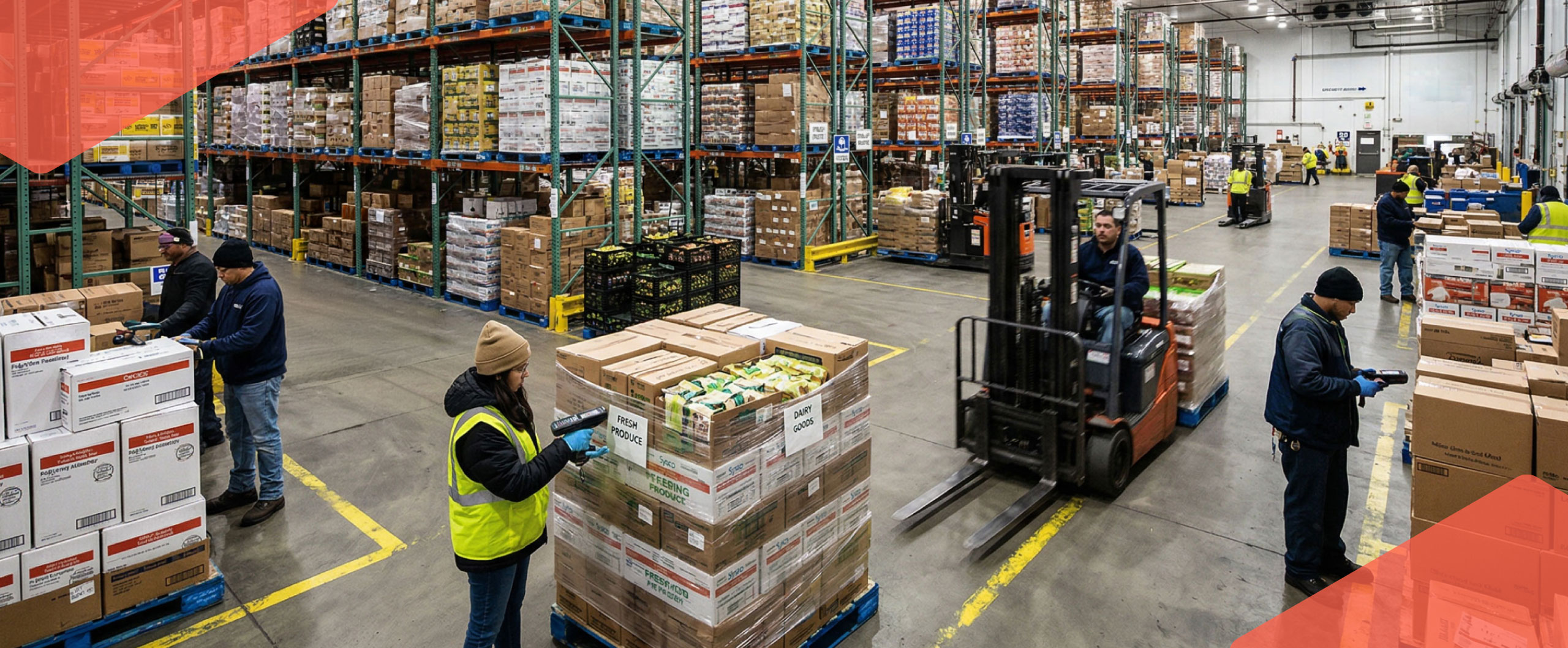
If you're responsible for performance, profitability, or customer outcomes in a food distribution business, you know the warehouse is where those results are ultimately determined. A Warehouse Management System (WMS) is the software backbone that orchestrates every task inside your distribution center, turning receiving, storage, picking, loading, and traceability into one cohesive, optimized workflow. In food distribution, that orchestration must also respect perishability, temperature control, variable units of measure, product transformation, and regulatory compliance. That's why a WMS purpose-built for food performs very differently than a generic ERP module.
BFC Software has spent 30+ years building software for the realities of food distribution, from buying to warehouse to transportation, so we’ll unpack how a WMS works, where ERP stops short, and why closing that gap is critical to protecting margin and enabling scalable growth.
WMS in one sentence: workflow and optimization at warehouse speed
A WMS is specialized software that:
- Directs people and inventory through every warehouse workflow with maximum efficiency
- Reduces touches, errors, and multiple passes through the warehouse via smarter task sequencing
- Maintains full product traceability down to lot, batch, catch weight, and date sensitivity
- Provides the data and visibility teams need to continuously improve slotting, replenishment, picking, and loading
Unlike an ERP, which is designed to manage finance, purchasing, and high-level orders, a WMS manages the physical work and data granularity inside the four walls. It integrates with barcode, mobile devices, and ERP systems to execute accurately and at scale.
Core functions of a food-focused WMS
- Receiving and putaway: Validate POs, capture lot/batch and date sensitivity, perform quality checks, and direct putaway to the right temperature zone and optimal slot.
- Inventory management: Track on-hand by location, lot, and status; enforce FIFO/FEFO; support cycle counting; and manage multiple units of measure including catch weighted items.
- Order orchestration: Release or wave orders; optimize picking by zone or batch; apply FIFO/FEFO; manage substitutions based on customer rules; and support targeted allocation.
- Replenishment: Trigger intelligent replenishment from reserve to pick slots to avoid short picks and congestion.
- Load planning and truck building: Sequence stops, assign loads to trucks by temperature compartment, and ensure every route leaves the dock organized for on-time, in-temp delivery.
- Pick, Load & Ship: Verify orders, print shipping labels, and confirm every order is accurately loaded before the truck leaves the dock.
- Traceability and compliance: Maintain full chain of custody from receiving to shipment for end-to-end traceability.
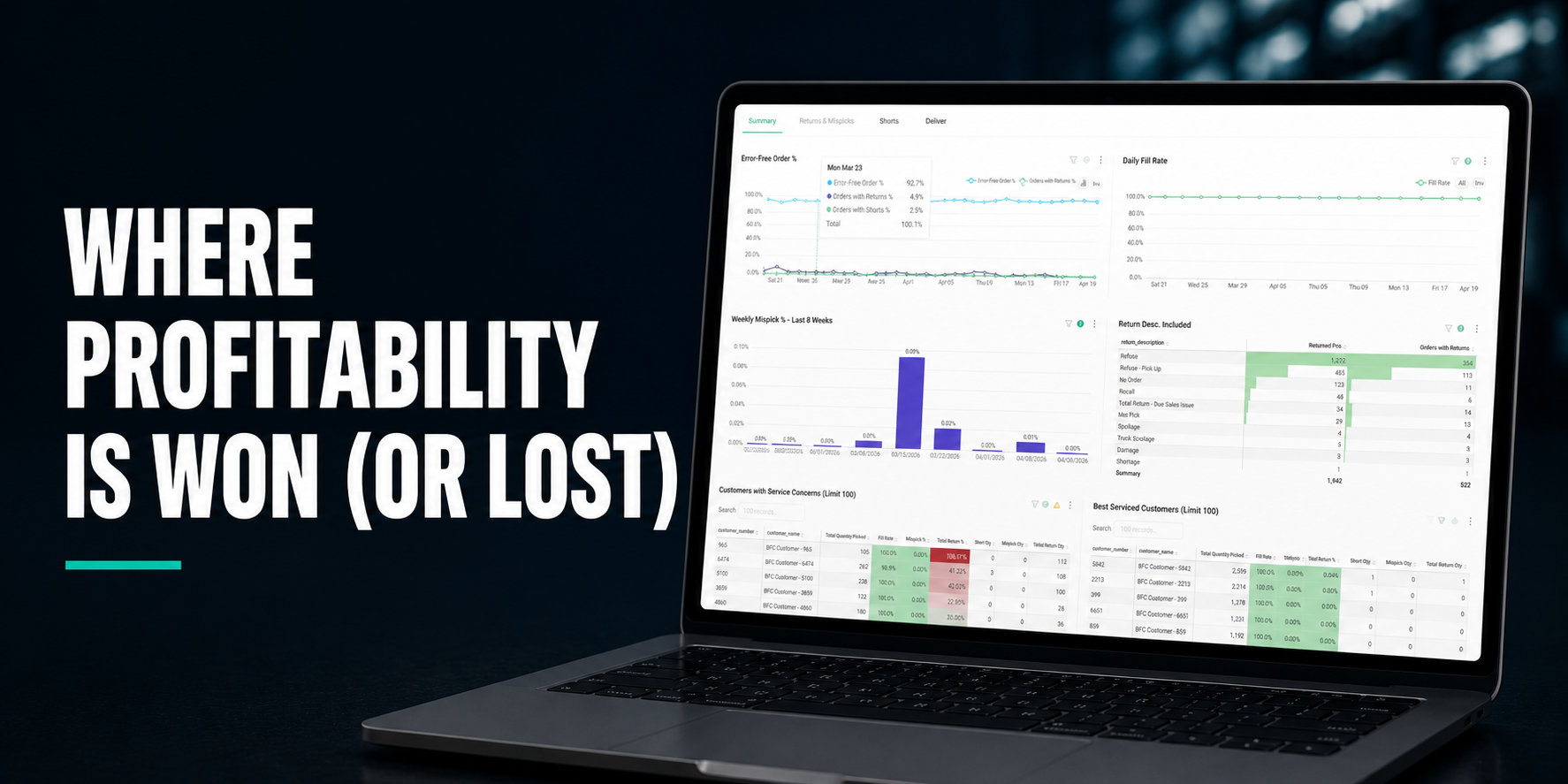
- Analytics: Provide near real-time dashboards for labor utilization, picks per hour, mispick rates, service levels, inventory health, waste, and spoilage.
Why ERP is not a WMS—especially in food
ERPs excel at planning and accounting. WMS excels at execution. Food operations demand execution detail most ERPs don’t natively handle.
| Topic |
ERP Focus |
WMS Focus (Food-Specific) |
| Execution Detail |
Orders, POs, financials |
Task-level work: scan events, slotting, FEFO, aisle paths |
| Units of Measure |
Case/eaches |
Catchweight, variable UOM |
| Perishability |
Limited date logic |
Expiration, shelf-life, FEFO, short-dated handling, and targeted allocation for customer-specific date rules |
| Temperature |
Basic item attributes |
Multi-temp zoning |
| Transformation |
Simple BOMs |
Repack and splits |
| Traceability |
Transaction-level |
Lot/batch lineage at every movement and zone change |
A generic ERP may record inventory, but it won't reliably prevent a short-dated lot from being picked before an older one, or direct a picker to the correct temperature zone for a specific product. That is workflow and execution at the task level, and it's pure WMS territory.
The five reasons generic tools fail in food distribution
- Perishability
- Food doesn't just turn obsolete; it spoils. A WMS must enforce FEFO, flag short-dated inventory, and prioritize rotation to minimize waste and spoilage.
- It needs to provide the data and visibility teams need to make smarter slotting decisions, so fast-expiring cases don't get buried in deep reserve.
- Temperature management
- Items move across multiple zones (frozen, cooler, ambient). A WMS should enforce correct zone storage so products are never placed in the wrong environment.
- Pick paths should sequence zones logically to maintain product integrity throughout the pick process.
- Units of measure (UOM) and catch weight
- Meat, cheese, and seafood ship by variable weight. A food WMS must capture actual weight at receiving and picking to keep audit trails aligned with lots.
- Transformation
- Food distributors repack and split cases. The WMS needs to support those workflows while maintaining full lot traceability without accounting workarounds.
- Traceability and compliance
- Lot/batch tracking from supplier through every movement is non-negotiable for recalls and regulatory compliance.
- Compliance with FSMA 204 and customer requirements depends on scan-verified events, not manual entries.
How a food WMS works—day in the life
Consider a regional broadline distributor running mixed-temp operations:
- Inbound and QA: The WMS scans inbound ASN/POs, validates quantities, records lot/batch, expiration, and catch weight, and directs QA holds as needed. Putaway tasks route product to correct temp zones and optimal slots based on velocity and FEFO.
- Dynamic slotting and replenishment: As orders stream in, the system adjusts pick-face slotting to reduce travel and congestion. Reserve-to-pick replenishments are timed to avoid line stoppages.
- Order orchestration: Orders are grouped by delivery window and temperature mix. Pickers receive voice-directed or device-directed tasks—cooler first, then ambient—to maintain temp integrity. The WMS enforces FEFO and customer-specific substitutions.
- Packing and verification: At pack-out, scans confirm item/lot/weight. The system prints labels with all required data (including catch weight and allergen callouts if applicable).
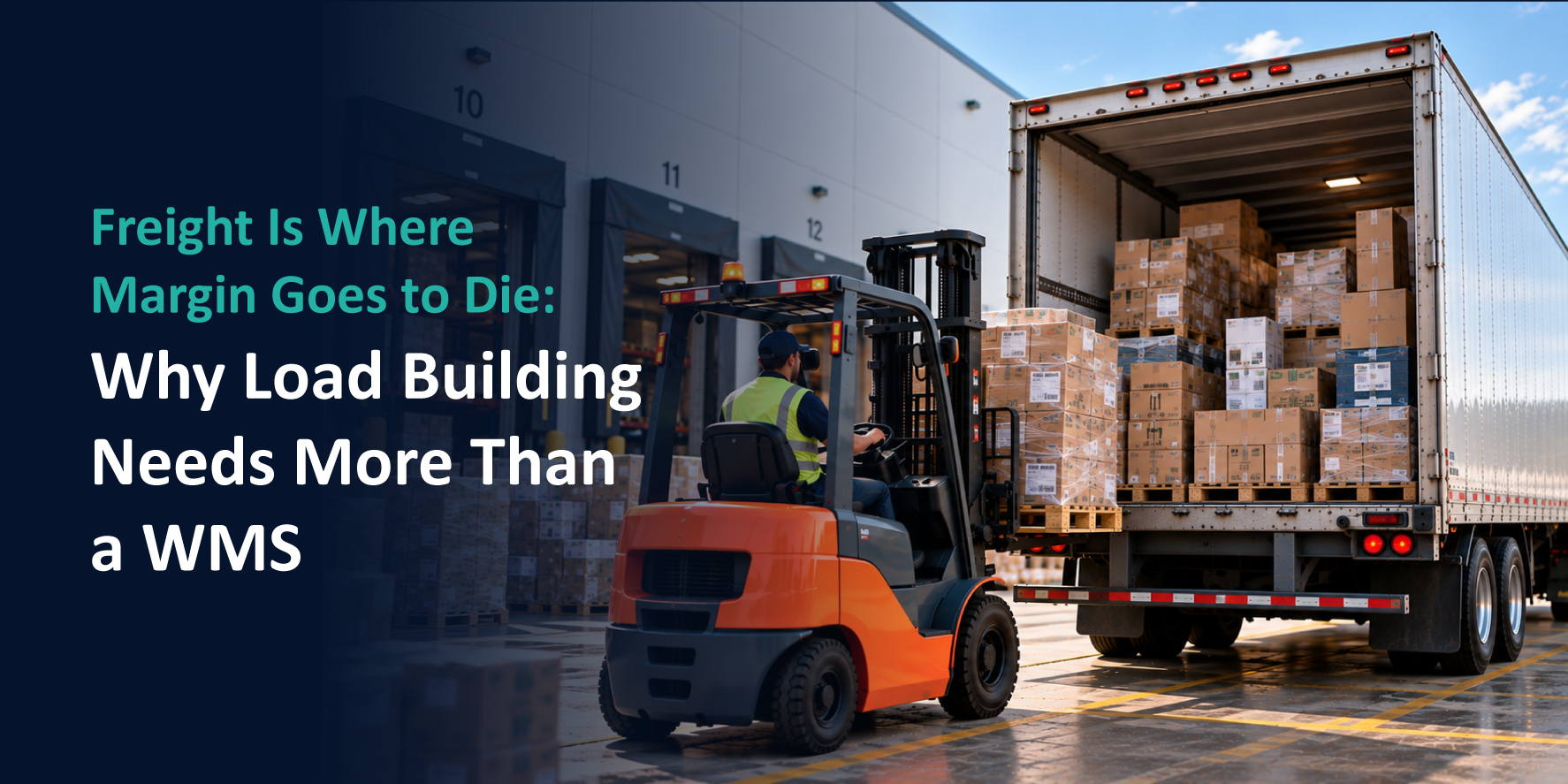
- Truck building and loading: The WMS (often working with a load planner or truck builder) sequences pallets by stop, temperature, and cube. Loaders get a guided workflow to build and stage by route and compartment, reducing rehandling and damages.
- Traceability and reporting: Every move—who touched it, when, where, which lot—is captured for audit-ready reports and rapid recall response.
BFC Software’s platform extends this flow end-to-end: purpose-built food buying aligns inbound with demand, the WMS executes warehouse work, and delivery tools like load planning and driver bid optimization help ensure on-time, in-temp service. A unified analytics dashboard surfaces exceptions in near real time so leaders can act before small issues become service failures.
Two brief examples from the field
- Produce distributor improves rotation and reduces waste and spoilage: By enforcing FEFO in replenishment logic and ensuring short-dated SKUs were replenished to front pick slots, a produce operation materially reduced waste and spoilage and cut emergency repacks. Exception dashboards helped supervisors intervene on inventory approaching date thresholds before it missed windows.
- Protein distributor streamlines catch weight and billing: Moving from manual weight tickets to scan-and-scale capture in the WMS eliminated reconciliation headaches. Actual weight data captured in the WMS fed cleaner billing downstream, improving credit accuracy and strengthening customer trust. These are common outcomes when workflows are designed for food’s realities, not retrofitted from generic warehouse tools.
Protein distributor streamlines catch weight and billing:
What to look for in a food distribution WMS
- Food-grade inventory control: FEFO, lot/batch, date sensitivity, short-dated alerts, QA holds
- Multi-temp intelligence: Zone-aware tasks and routing that maintains product integrity
- Catch weight and UOM flexibility: Variable weight capture at receiving and picking with full lot alignment
- Transformation workflows: Repack and split capabilities with full traceability
- Advanced orchestration: Dynamic slotting and optimized replenishment
- Loading excellence: Built-in truck building, load planning, and stop sequencing
- Traceability and reporting: Audit-ready lineage and rapid recall support
- Usability and devices: Mobile scanning built for warehouse speed and accuracy
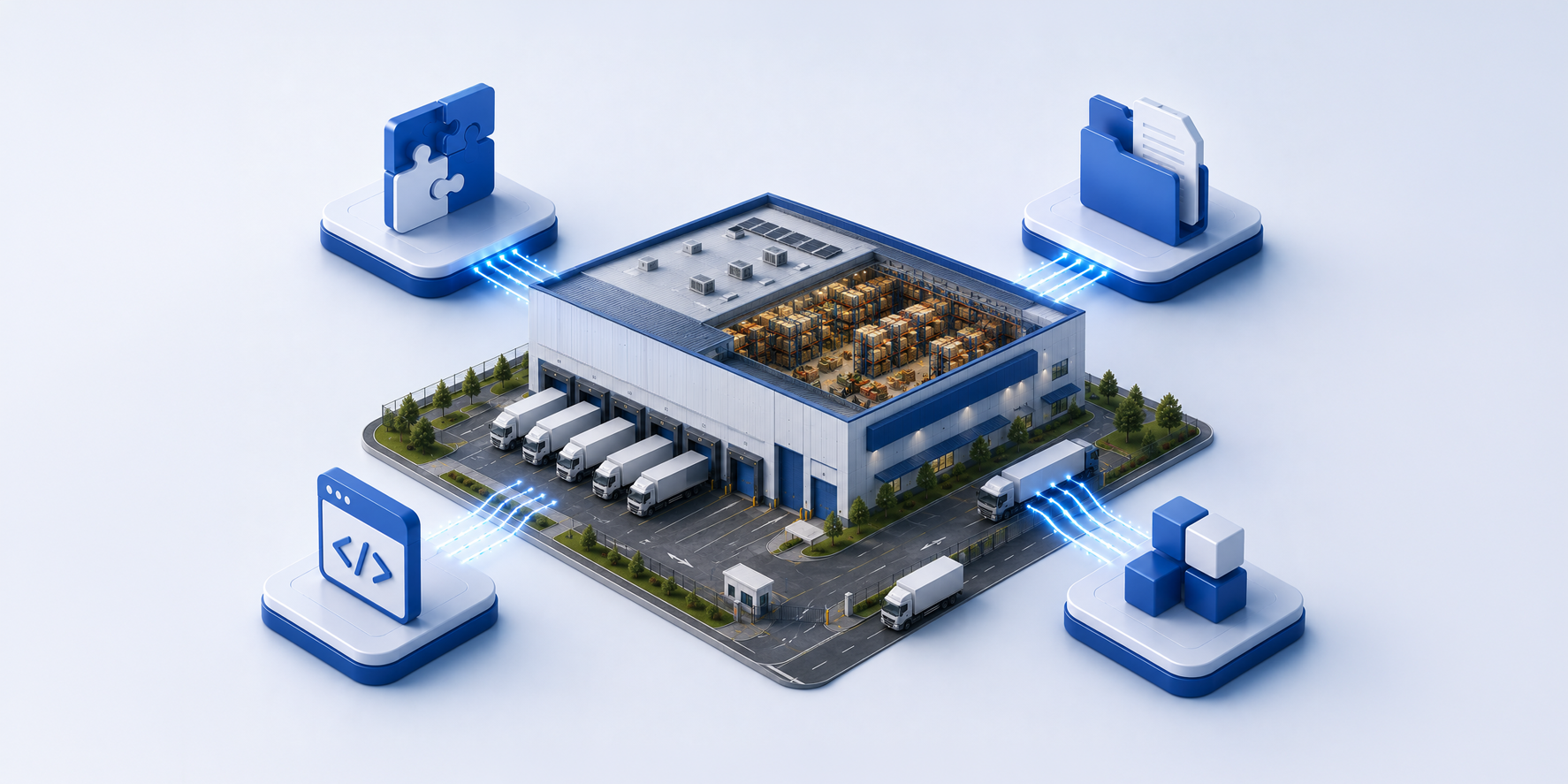
- Integration: APIs and file-based connections to ERP and other core systems
- Analytics: Near real-time dashboards, anomaly detection, and configurable rules
BFC Software's food operations platform includes a warehouse management solution alongside replenishment optimization, truck building, load planning, and driver bid optimization, helping distributors optimize their product, people and trucks across buying, warehouse, and outbound operations.
What is a Warehouse Management System (WMS) and how does it work for food distribution? Here’s the bottom line.
A WMS for food distribution is not just "warehouse software." It's the execution engine that aligns people, inventory, temperature, time, and compliance across every hour of every shift. ERPs manage the plan; a food WMS manages the work.
If you’re assessing whether your current tools match the realities above, BFC Software can help you benchmark workflows and identify quick wins—often without a rip-and-replace. Explore our food distribution software, see our warehouse management solution in action, or request a working session with our team:
Build a warehouse that protects freshness, assures compliance, and delivers profit—by design.
.svg)












.png)


