.svg)


Labor shortages force warehouses to do more with fewer people, and the margin for error keeps shrinking. When a replenishment gets skipped, when a load gets built without full visibility into weight and cube, or when a customer service rep has to hop between three reports to answer one question, the cost isn’t just time — it’s trust. Distributors are being asked to move faster while proving, line by line, that the work actually got done.
In response, distributors are worried about tribal knowledge walking out the door — the supervisor who "just knows" which slots get skipped, or the planner who eyeballs a trailer diagram — and moving toward system-directed execution, where the software itself tracks outcomes, surfaces exceptions, and gives frontline teams a single place to act.
As part of its Summer 2026 release, we introduced several enhancements across Warehouse Management, Transportation, and Analytics, each aimed at replacing guesswork with visibility.
Accountable replenishment, from start to finish. Every priority replenishment in BFC’s WMS now carries its own outcome record — whether it was completed, skipped, or deleted, who handled it, and how much was actually moved. Supervisors no longer have to reconstruct what happened after the fact; the system remembers for them.
One screen to review and act. The View Replenishments inquiry has been rebuilt to cover an entire warehouse at once instead of one department at a time. Supervisors can filter by date, item, or aisle range and mark work done, reopen it, or escalate priority without leaving the screen — turning review from a reporting exercise into a working tool.
Exception-first reporting. Rather than reading through every replenishment to find the handful that went wrong, a new exceptions report lets teams choose which exception types matter and returns only those results, focusing attention where it’s actually needed.
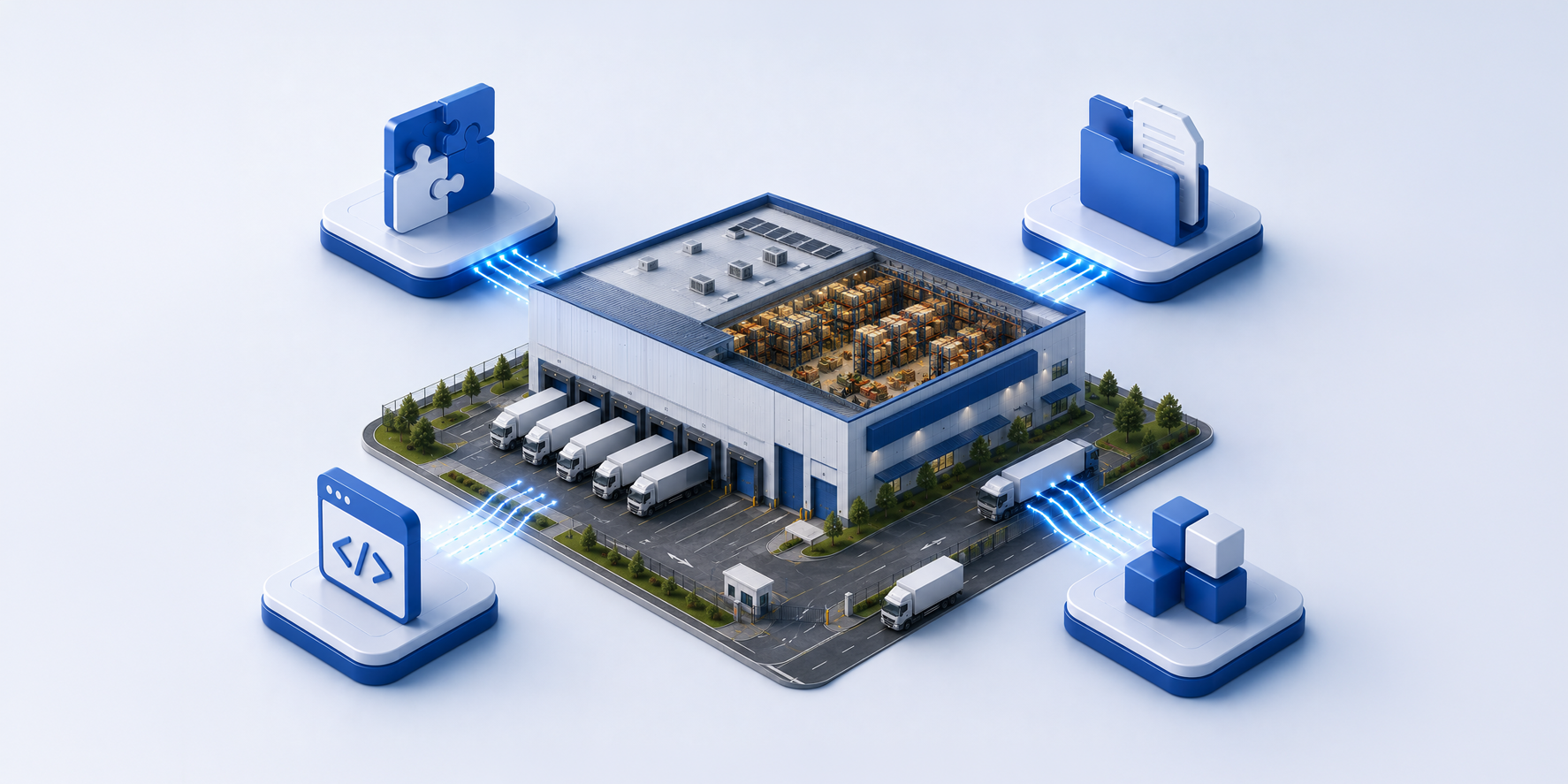
A true 3D view of the load. On the transportation side, LoadBuilder™ and LoadPlanner™ now renders a full 3D Load Visualization of the loaded trailer, rotatable full 360 degrees. Planners can validate container placement, train new loaders, and sequence driver deliveries before the trailer is ever built — catching problems on screen instead of on the dock. Take the Tour.
Faster answers on the shipping side. The Shipping Log now includes purchase order number, item UPC, and customer route directly on each entry, and can run automatically on a schedule — removing the manual cross-referencing that shipment reconciliation used to require.
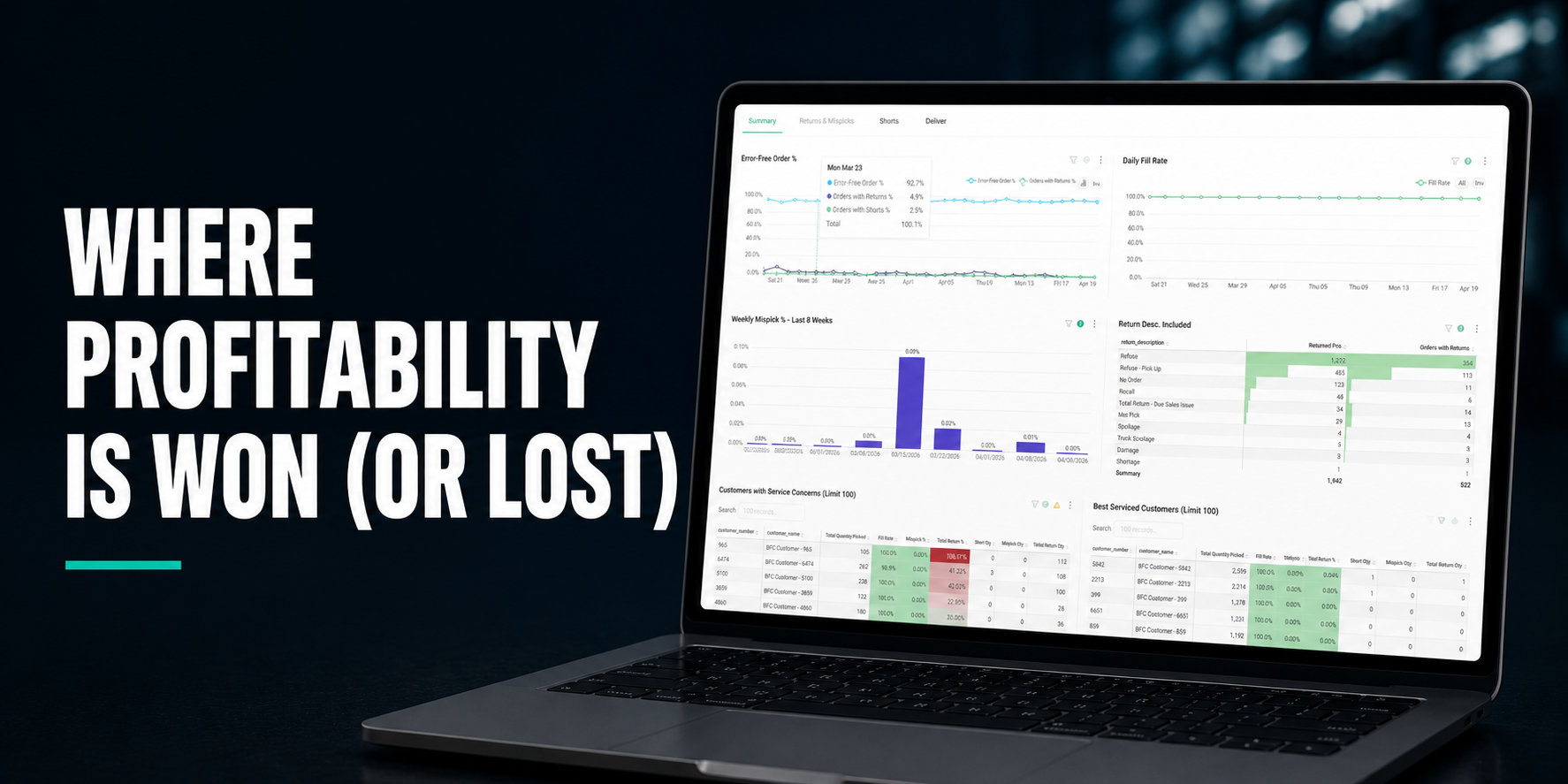
Service and driver performance, in one place. BFC Analytics rounded out the release with two new dashboards. The Customer Service dashboard brings returns, shorts, and delivery errors together at the customer level, so reps can triage issues without exporting and pivoting across separate reports. The Deliver Insights dashboard gives managers a single view of driver scan percentage, driver utilization, and hours by route, driver, and customer — turning driver performance from an anecdotal conversation into a measurable one.
Together, these changes shift the operational center of gravity from memory to record-keeping. Warehouse managers can answer "did this get done, and by whom" without relying on someone’s recollection. Supervisors spend their limited time on the exceptions that need judgment, not the routine work that doesn’t. Planners can catch load-quality issues before a trailer leaves the yard rather than after a claim comes in. And service and operations leaders can see performance trends — by customer, by driver, by route — without stitching together multiple reports.
For distributors managing tighter labor pools and rising service expectations, the common thread is the same: less tribal knowledge, more system-verified execution, and a clearer record whenever someone asks what happened.
To learn more about any of the solutions noted here, please contact us.











.png)


