.svg)
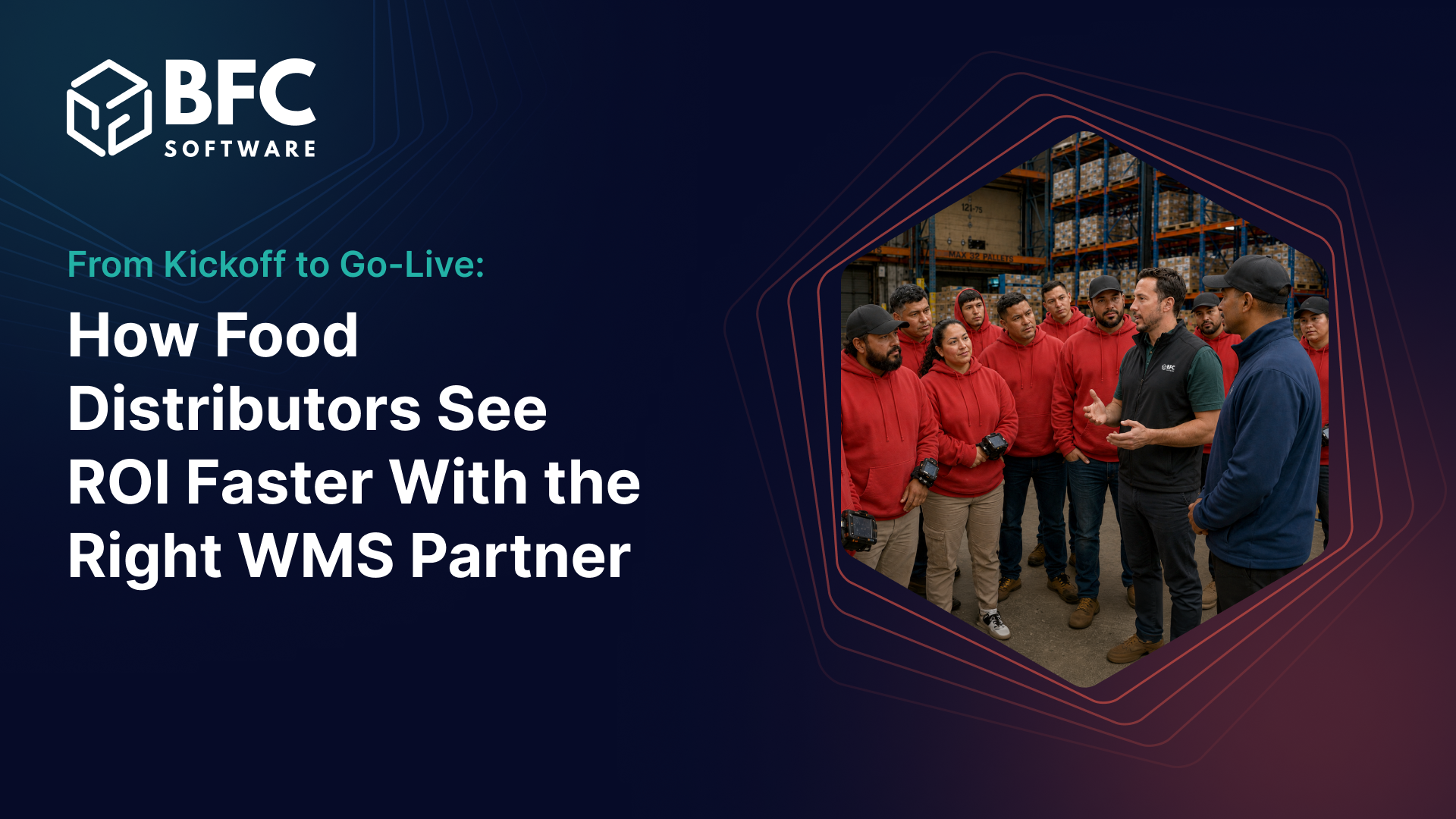

BFC pairs every WMS rollout with an implementation team of former food distribution professionals, a documented project plan, hands-on on-site training, and post-go-live ROI tracking, an approach built to get distributors live faster and producing results sooner than a standard software-only rollout.
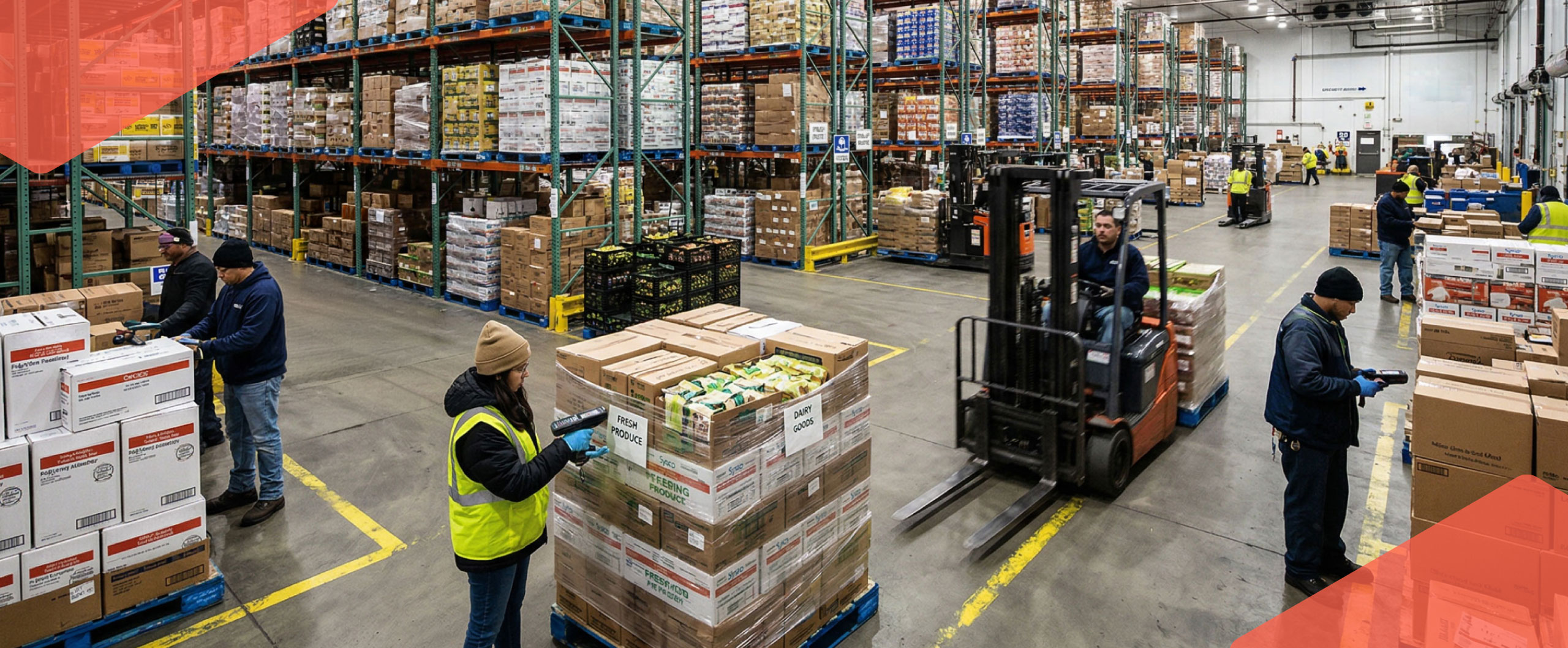
Picture a 500,000-square-foot food distribution warehouse that had run on pen and paper for decades, about to flip the switch on its first WMS. The team walks onto the floor on go-live day confident, not crossing their fingers, because the people who trained them had already run a warehouse themselves. That's not luck. That's what a WMS rollout is supposed to feel like when the right team is standing beside you.
Every WMS vendor will tell you their software is powerful. Far fewer can point to a rollout guided by people who've actually run a warehouse, not just configured software around one, and that's where most rollouts succeed. Ask any food distributor who has been through a system change, and they won't talk about features first. They'll talk about who understood what a mispick costs on a tight delivery window, and who stuck around after the contract was signed. That's the part of the investment that's hardest to shop for, and it's the one BFC has quietly built a reputation on for over 30 years.
The biggest differentiator in a WMS rollout isn't the software. It's who's standing next to you when it goes live.
BFC's implementation team is made up of people who have run food distribution facilities themselves and sat on the other side of a rollout before joining BFC. They know what catch weights, mispicks, inventory accuracy, warehouse workflows, delivery deadlines, and the operational realities food distributors face actually mean because they've managed around them. That experience shows up in how they guide a rollout. Instead of handing over a rigid, one-size-fits-all playbook and expecting a warehouse to bend around it, they guide best practices built on years of hands-on food distribution experience and adapt to how your operation runs.
"We've run facilities. We've sat on the other side of an implementation," says Fonzi Gomes, VP of Professional Services at BFC Software. "We're not walking in with a script telling you to work by our rules. We've lived through the same pains our customers are going through, so we help them get up and running in a way that actually fits their operation, not the other way around."
"It's never plug-and-play," Gomes adds. "It takes a village — and ours has been in the building before."
This isn't a small thing. It's the difference between a project manager reading from a script and an operator who's led a team through this kind of change before.
Across more than 300 locations where BFC has implemented its software, customers aren't getting a vendor. They're getting a guide who's already walked the path. See what that experience looks like day to day.
Every BFC rollout runs against a documented project plan built around your ERP, your warehouse, and your go-live date, with clear milestones and owners from day one. No one has to chase a status update. Risks and delays get surfaced proactively, so nothing stalls quietly in the background while a go-live date gets closer.
That plan doesn't disappear once the software goes live, either. It hands off cleanly to your Customer Success Manager, who takes it from there.
Training is where a lot of rollouts can quietly fall apart but not at BFC. It's an area BFC treats as hands-on by design. Virtual sessions prepare your team ahead of time, but the real training happens on site, face to face, when it matters most. The implementation team shows up in your warehouse, works alongside your people, and stays engaged through go-live rather than handing over a manual and hoping it sticks.
That on-site presence isn't a one-and-done visit either. For larger rollouts, the team returns closer to launch, once the operation has had time to put its own processes in place, to see firsthand how the system is actually being used in the warehouse. That extra visit catches the small process gaps and workflow adjustments most rollouts don't find until they're already live. It's a more thorough approach, and it takes a little more time, but it's part of why BFC customers tend to walk into go-live with confidence instead of crossed fingers.
For the people running receiving, picking, and loading that week, this is the difference that matters most. Instead of learning a new system from a manual at your desk, you've got someone standing next to you on the floor when a question comes up mid-shift. You're not left to figure it out alone, and you're not the one responsible for training the rest of your team from scratch.
That warehouse from the opening belongs to Latina Boulevard Foods, a Buffalo, NY distributor that ran its operation on pen and paper for decades before going live with BFC. Quentin, the Latina team member who stepped up to become the internal super user during the rollout, points to the same thing distributors tell us again and again: it wasn't just the software. It was having someone on the BFC team who could translate the warehouse floor into the technology and back. "Having him know what we're trying to do is a massive help," Quentin says.
"A rollout isn't just flipping a switch on new technology," Gomes explains. "It's like an engine. Every cog has to be aligned, or the engine won't perform the way you want it to, no matter how good the software is. Most of what makes a go-live successful or not comes down to the people side, not the system."
Throughout it all, the team also trains the trainer, building a super user inside your organization who can carry that knowledge forward long after the implementation wraps.
A rollout isn't done just because the system is live. It's done when your operation is seeing the results you were promised.
That's where your Customer Success Manager (CSM) comes in. Once you go live, the CSM steps in to track adoption and work with your team toward the outcomes and ROI you purchased the system for, meeting regularly through structured business reviews to walk through performance and flag where there's room to improve. Adoption isn't assumed. It's measured and managed, which means the value of the investment doesn't get discovered by accident months later. It gets tracked on purpose, from day one of go-live.
Warehouse operations don't stop at 5p.m., and neither does BFC's support team. When an issue comes up overnight or over a holiday weekend, a ticket gets a prompt response, day or night. It's a small detail on paper and a significant one at 2 a.m. during a shift.
None of this is an accident. It reflects a simple belief that runs through BFC's whole approach to implementation: rollouts rarely fail because of the software. They fail on the people side, the change management, the training gaps, the questions nobody thought to ask before go-live. That's exactly why BFC treats these five areas as differentiators worth building on, not afterthoughts bolted onto the software:
· Implementation team — former food distribution professionals, not consultants reading from a script
· Project management — a documented plan built around your ERP, warehouse, and go-live date
· Training — virtual preparation paired with hands-on, on-site instruction that stays engaged through go-live
· ROI tracking —adoption and outcomes measured on purpose, not assumed
· Support — responsive help around the clock, not just during business hours
That's not a number BFC takes lightly, and it's the reason food distributors keep choosing BFC when it's time to go live and stay live.
Ready to see what a rollout backed by real food distribution experience looks like for your operation? Contact an Expert or see real results from teams who've already made the switch.









.png)


